

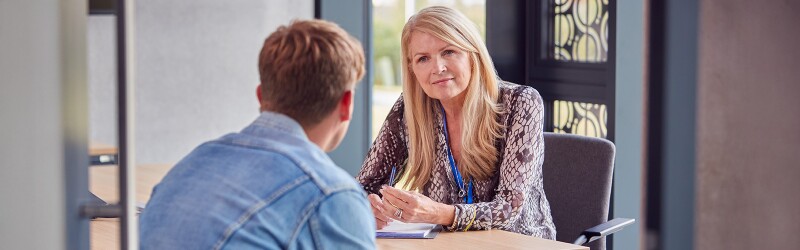
Modern school counselor skills combine the empathy of a therapist, the academic guidance of a teacher and the advocacy and leadership of a social worker. The traditional focus on college admissions guidance has evolved into a far more comprehensive role. Today's school counselors continue to support students' postsecondary planning while also modeling and developing the coping skills students need to succeed in life. They contribute to schools' ongoing efforts to set standards and improve outcomes. As the American School Counselor Association (ASCA) succinctly puts it, school counselors "improve life-readiness and academic success."1
Research supports the effectiveness of this expanded role. Perhaps most notably, the "All Hands on Deck" study documented how Sunnyside High School in Washington increased its graduation rate from 49% to 72% over three years by implementing policies and strategies aligned with the ASCA National Model for school counseling.2
This article examines the essential competencies for contemporary school counseling, from interpersonal communication to career guidance and advocacy.
Communication and Interpersonal Skills
School counselors build trust with students, parents and educators, establishing the relationships essential for effective collaboration across school communities. They also serve as role models, demonstrating the communication and social skills that help young people navigate challenges and thrive as adults.
Programs such as William & Mary's Online Master of Education (M.Ed.) in Counseling with a concentration in School Counseling provide rigorous preparation in counseling techniques and theories of psychotherapy. Through this coursework, students develop core interpersonal competencies including active listening and empathy—skills fundamental to effective counseling practice.
Cultural Competence and Diversity Awareness
School counselors play a critical role in advancing equity and closing opportunity gaps for students from all backgrounds. This work requires more than good intentions—it demands rigorous training in recognizing bias, understanding cultural contexts and responding with sensitivity to the diverse experiences students bring to school each day.
Graduate preparation in school counseling addresses these competencies directly, and the impact of culturally responsive counseling is well documented. A 2011 study published in Counseling Outcome Research and Evaluation found significant improvements in both reading and math achievement among Latina/Latino students who participated in bicultural/bilingual counseling interventions.2 When counselors understand and honor students' cultural identities, they create conditions for academic success.
Academic and Postsecondary Guidance Skills
While the counselor's role has expanded significantly, academic and career guidance remain central to the profession. School counselors help students navigate increasingly complex pathways from secondary education to postsecondary opportunities—whether that means four-year universities, community colleges, vocational programs, military service or direct entry into the workforce.
Effective guidance requires more than familiarity with application processes. Counselors must understand how to help students identify their strengths and interests, set realistic yet ambitious goals, and develop the planning skills necessary to achieve them. This work is particularly critical for first-generation college students and those from under-resourced communities, where counselors often serve as the primary source of information about postsecondary options and financial aid.
Graduate preparation in school counseling develops these competencies through coursework in career development theory, college counseling practices and the systemic factors that shape students' educational trajectories. Counselors learn to advocate for equitable access to advanced coursework, connect students with scholarship opportunities and help families navigate complex educational systems.
Social-Emotional Support Skills
The mental health needs of today's students are urgent and undeniable. School counselors increasingly serve as first responders to anxiety, depression, trauma and crisis—often bridging the gap between the beginning of students’ struggles and their ability to gain access to specialized mental health services.
This work requires sophisticated clinical skills. Graduate programs prepare counselors to recognize early warning signs of mental health challenges, respond effectively to students in crisis and implement evidence-based interventions that build resilience and healthy coping strategies. Counselors learn trauma-informed approaches that account for adverse childhood experiences and their profound effects on learning and behavior.
Beyond individual intervention, school counselors help shape institutional responses to student mental health. They advise administrators on resource allocation, develop schoolwide social-emotional learning programs and connect struggling students with community mental health providers. When a student who has been withdrawn and isolated begins to reengage with peers, or when a teenager in crisis finds the courage to ask for help, these moments reflect the counselor's skill in creating trust and providing support during the most vulnerable periods of young people's lives.
Advocacy and Leadership
School counselors must be effective leaders—trusted by students, respected by colleagues and recognized for their professional expertise. These qualities position them to advocate for systemic changes that affect entire student populations, not just individuals.
Advocacy work takes many forms. Counselors challenge policies that create barriers to educational opportunity. They push for equitable access to advanced coursework and programs for gifted students. They speak up when disciplinary practices disproportionately affect students of color. They secure funding for mental health resources and programs that address root causes of academic struggle rather than symptoms alone.
This advocacy is especially critical for students who lack the social capital or resources to navigate complex educational systems. When a student faces suspension for behavior rooted in unaddressed trauma, when a talented student from a family in financial straits has never been told about AP courses, when a struggling reader needs an intervention that the school budget doesn't prioritize—the counselor often becomes the essential voice ensuring that these students' needs are heard and addressed.
Data-Driven Decision-Making
Today’s school counselors operate in an era of accountability. Administrators ask: What impact are counseling services having on student outcomes? Which interventions are working? How do we know? Counselors must be prepared to answer these questions with evidence, not just anecdotes.
This requires fluency in data collection, analysis and interpretation. Counselors track metrics such as disciplinary referrals, course enrollment patterns, attendance rates and academic performance—then use this information to identify students who need support, evaluate program effectiveness and advocate for resources. When counselors propose a new intervention for students struggling with chronic absenteeism, they build the case with baseline data, implementation plans and measurable outcomes.
The profession's commitment to evidence-based practice runs deep. The American School Counselor Association grounds its guidance in research—including, for example, the recommendation that counselor-to-student ratios not exceed 1:250, a standard supported by multiple published studies demonstrating the relationship between caseload size and counselor effectiveness.3
Graduate preparation develops these competencies through both coursework and extensive supervised fieldwork. William & Mary's school counseling concentration requires 700 hours of clinical experience—100 hours in practicum and 600 in internship—during which students learn to collect and use data in actual school settings, justify interventions to supervisors and administrators, and see firsthand how evidence shapes professional practice.
Technology and Digital Literacy
Contemporary school counseling requires fluency with educational technology and digital communication tools. Counselors must be prepared to support students in online and hybrid learning environments, conduct virtual counseling sessions and leverage digital platforms for everything from college application guidance to mental health resources.
The digital toolkit available to school counselors continues to expand—from design platforms like Canva for creating visual resources, to digital calming rooms that help students regulate emotions, to data management systems that track student progress and outcomes.4 Effective counselors understand not just how to use these tools, but when they're appropriate, what their limitations are and how to ensure equitable access for all students.
Lead the Next Generation of School Counseling
Today's school counselors are therapists, educators, advocates and systems-change agents. Many enter the profession after years in the classroom, bringing a deep understanding of school culture and student development. Others come from mental health, social work or other helping professions. They’re united by a commitment to work that matters—and the recognition that serving students well requires sophisticated skills, ongoing professional development and the ability to effect change within complex, often under-resourced systems.
The path to becoming a licensed school counselor begins with rigorous graduate preparation. William & Mary's Online M.Ed. in Counseling with a concentration in School Counseling provides that foundation through a curriculum grounded in counseling theory and practical application. Students complete 700 hours of supervised clinical experience, meeting licensure requirements for most states while developing the competencies essential to effective practice.
The program reflects William & Mary's standing as one of the nation's most respected public universities and its School of Education's commitment to preparing transformative leaders. Faculty members bring scholarly expertise and active professional practice to their teaching. The flexible online format allows you, as a working professional, to pursue this degree without interrupting your career, while two brief on-campus residencies create opportunities for direct engagement with faculty and peers.
If you're ready to expand your impact on students' lives—to be the counselor who helps a struggling student find hope, who advocates for systemic changes that create equity, who builds the trust that allows young people to ask for help during their most vulnerable moments—explore what this program can offer.
Schedule a conversation with an admissions outreach advisor to discuss how William & Mary can prepare you for this essential work.
- Retrieved on November 13, 2025, from schoolcounselor.org/getmedia/ee8b2e1b-d021-4575-982c-c84402cb2cd2/Role-Statement.pdf
- Retrieved on November 13, 2025, from schoolcounselor.org/getmedia/7d00dcff-40a6-4316-ab6c-8f3ffd7941c2/Effectiveness.pdf
- Retrieved on November 13, 2025, from schoolcounselor.org/Publications-Research/Research/Impact-of-School-Counseling
- Retrieved on November 13, 2025, from schoolcounselor.org/Newsletters/May-2022/Discover-Tech-Tools-The-Road-to-techCAREtwins?st=NJ